However, as display applications become increasingly widespread, a new market trend is emerging: a growing number of clients are focusing on the long-term operational performance of display systems.
**A Shift in Project Mindset**
For many commercial display projects, an LED display screen often has a service life spanning several years.
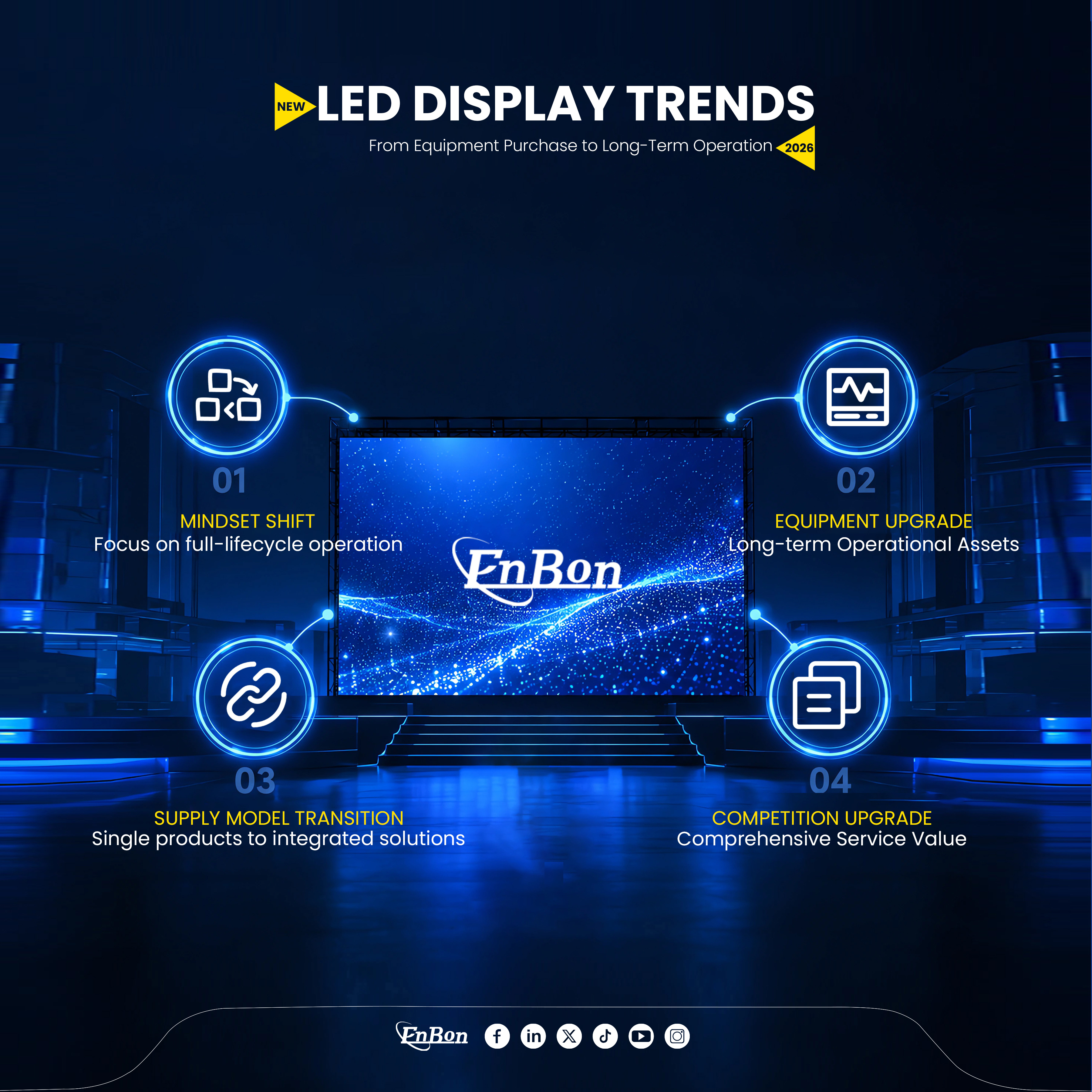
Against this backdrop, the value of a project is no longer defined solely by the procurement phase but is increasingly realized through long-term operation.
Clients are now prioritizing:
1. Ease of maintenance
2. Operational stability
3. Risk mitigation regarding downtime
4. Ease of future upgrades and expansion
5. Manageability of long-term operating costs
The importance of these factors is steadily rising.
**Long-Term Value Takes Center Stage**
Whether for commercial complexes, corporate showrooms, or outdoor advertising media, display systems are evolving from simple equipment investments into long-term operational assets.
For operators, stable performance translates to higher operational efficiency; for advertising media, continuous uptime means greater commercial value. Consequently, projects are increasingly prioritizing product reliability, system compatibility, and comprehensive solution capabilities.
Industry competition is also shifting from a focus on products alone to a competition based on comprehensive service capabilities.
**Growing Demand for Integrated Solutions**
As project scales expand and application scenarios become more complex, the demand for integrated solutions is becoming increasingly apparent. Beyond the display hardware itself, components such as control systems, content management, audiovisual integration, and after-sales services are becoming vital elements of project planning.
This shift is driving the industry to evolve from merely "selling products" to "providing solutions."
**Implications for the Industry**
For the LED industry, this trend signals a maturing market. Clients are no longer focused solely on the screen itself but on the value delivered throughout the project's entire lifecycle.
In the future, companies that can excel in product quality, project delivery, and long-term service capabilities will be better positioned to gain market recognition.
**Conclusion**
The transition from viewing displays as mere equipment to seeing them as operational assets represents not just a change in project models, but an evolution in market demands. As display systems become an integral part of long-term business operations, the importance of stability, efficiency, and sustained value will continue to grow. For the LED industry, this may well be a key direction for future development.