

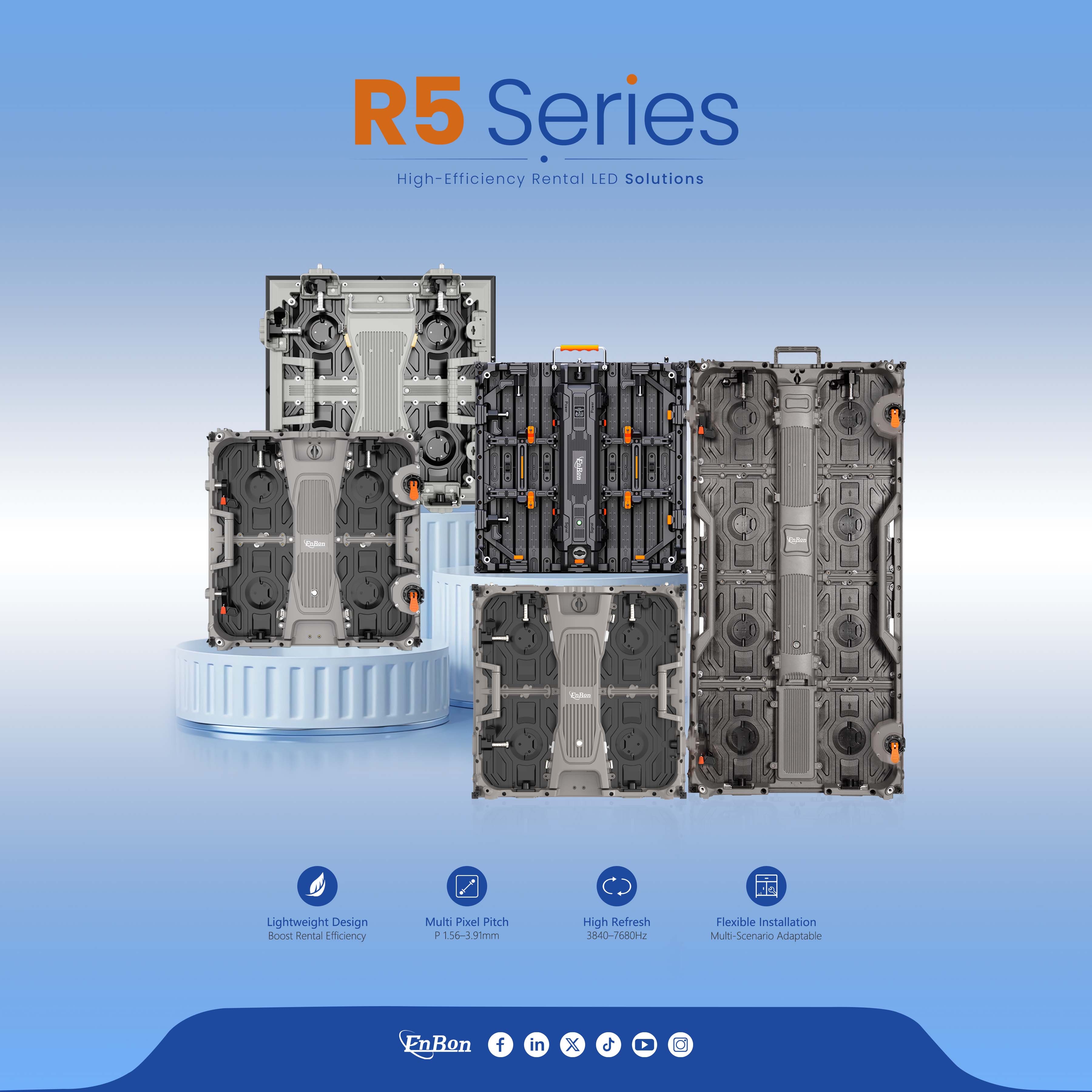
The R5 series is designed based on the core needs of rental applications, achieving a balance between structural efficiency and display performance, providing a stable and reliable display solution for high-frequency event scenarios.
Lightweight Structural Design
The R5 series adopts a high-strength die-cast aluminum cabinet structure, with a single cabinet weighing approximately 8kg. This effectively reduces the burden of transportation and on-site setup while ensuring structural strength and stability. The modular structure design supports rapid assembly and disassembly, significantly improving the deployment efficiency of stages and event venues, suitable for rental scenarios requiring frequent replacement and rapid execution.
Multiple Pixel Pitch Configurations
The R5 series supports multiple pixel pitch configurations from 1.56–3.91mm, allowing flexible selection based on different event scales and viewing distances. Through reasonable pixel density configuration, it achieves stable visual effects from close-range high-definition displays to mid-to-long-range stage displays, meeting diverse rental needs.
High Refresh Rate
The R5 series boasts a high refresh rate of 3840–7680Hz and 13–16bit grayscale performance, maintaining smooth visuals and clear details even under stage lighting, camera shooting, and high-speed dynamic video playback environments. It effectively reduces flicker and ghosting, enhancing overall visual quality.
Multi-Scenario Adaptability
The R5 series supports a front and rear maintenance structure design and is equipped with a quick-assembly system and rigid connection structure, ensuring good consistency and stability even after multiple setups.
It also features IP45 (indoor)/IP65 (outdoor) protection capabilities, covering various indoor and outdoor rental scenarios and enabling flexible application switching.
Conclusion
The R5 series provides a highly efficient and adaptable display solution for the rental market through its lightweight structural design and stable display performance.
In rapidly changing event scenarios, it is a reliable choice that balances setup efficiency and visual performance.